There are very few programmes that have directly tried to tackle forced and early marriage through cash or asset transfers. Of the programmes that have, many are fairly recent or are small-scale, making it difficult to assess long term impacts or draw lessons (Sinha and Young 2009). Some cash and asset transfer programmes have indirectly impacted on child and forced marriage ...» more
What is social protection?
Concepts and definitions Social protection is concerned with protecting and helping those who are poor and vulnerable, such as children, women, older people, people living with disabilities, the displaced, the unemployed, and the sick. There are ongoing debates about which interventions constitute social protection, and which category they fit under, as social protection ...» more
Design and implementation
This section provides links to key manuals, guidance and other practical resources. General manuals Devereux, S. (2008). Innovations in the Design and Delivery of Social Transfers: Lessons Learned from Malawi. IDS and Concern Worldwide. See full text Grosh, M., del Ninno, C., Tesliuc, E. & Ouerghi, A. (2008). For Protection and Promotion: The Design and Implementation ...» more
Vulnerable groups: needs and challenges
Women and girls It is often women who require social protection interventions, as they are disproportionately vulnerable due to lack of capital, high wage differentials and gendered work norms, bearing the responsibility for childcare, and exclusion from basic services. Social assistance programmes, particularly conditional cash transfers, are often aimed at women as the ...» more
Policy objectives and evidence of impacts
Social protection can have a wide range of objectives and impacts, from food security, access to services, gender equality, and state-building, to social transformation. The emphasis in developing countries has been on poverty and vulnerability reduction, and human development, for which there is good evidence. There is less evidence on longer-term developmental impacts such as ...» more
Global issues and debates
Page contents Coverage, scale and systems Financing and affordability Political economy Targeting Conditionalities Shocks and risks Fragile and conflict-affected states State-building Coverage, scale and systems The last 15 years have seen a huge increase in social protection programmes, both the number of programmes and number of countries which have ...» more
Types of social protection
Social assistance Social assistance is direct, regular and predictable cash or in-kind resources transfers to poor and vulnerable individuals or households (Arnold et al., 2011: 91). It is usually provided by the state and financed by national taxes (Barrientos, 2010). Support from donors is also important in lower income contexts. Transfers are non-contributory, i.e. the full ...» more
Social protection Management Information Systems (MIS)
MIS are useful because integrated data management of social protection programmes can lead to more equitable distribution of resources; provide oversight of multiple schemes; establish links with other services; and increase efficiency through economies of scale (Barca & Chirchir, 2014). There is a considerable literature on policy guidance, design guidelines, and a general ...» more
Formal and informal policing in Iraq
Within the literature there seems to be a number of common themes and recommendations: Supporting the judiciary and improving investigative capability: Greater security for the judiciary and improved legal education, improved capacity of lawyers, as well as greater support for investigative capability. Improving police-community relations: This can be through setting up joint ...» more
Impact and implications of the Ebola crisis
Political impact and implications: Initial analysis suggests that governments' poor management of the Ebola crisis has generated frustrations and exposed citizens’ lack of trust in their governments. The Ebola crisis is likely to play a very political role in the next election in Sierra Leone and there are predictions that the opposition will win as a result. Economic impact ...» more
Social protection accountability
Accountability and good governance are strong themes of development interventions in general, but have yet to be applied systematically to social protection programmes. Social assistance accountability mechanisms usually focus on two main areas: (i) the flow of information and (ii) the flow of funds (Bassett et al., 2012). Most programmes have implemented a series of audits, ...» more
Formal justice in Iraq
The criminal justice system in Iraq remains weak. There are a wide range of reports (largely conducted by international NGOs, UN organisations, and state agencies) that reveal a consistent failure to meet international and domestic legal obligations. Areas of particular concern include: Arrest and detention: Iraqi security forces continue to engage in arbitrary arrest and ...» more
Donor action on women’s employment in ASEAN countries – update
This report updates on an earlier report on the same topic. It confirms that donor action on women’s employment and entrepreneurship has been limited or very recent in ASEAN countries. The ILO is the major aid entity involved. Other major ones include the Asian Development Bank, UN Women and the International Finance Corporation. Limitations and gaps in the literature are ...» more
Tax reform

Tax reform can reduce tax evasion and avoidance, and allow for more efficient and fair tax collection that can finance public goods and services. It can make revenue levels more sustainable, and can promote future independence from foreign aid and natural resource revenues. There is increasing recognition of taxation’s role in state-building, in addition to greater ...» more
The multilateral system’s contribution to peace and security
The literature broadly suggests that: As a result of the increasingly complex conflict environments, individual actors are unable to achieve goals on peace and security by themselves. More joint operations are occurring in order to overcome the challenges posed by complex conflict environments, with joint multilateral action seen to promote more effective and efficient ...» more
Political economy analysis

Political economy analysis (PEA) aims to situate development interventions within an understanding of the prevailing political and economic processes in society – specifically, the incentives, relationships, and distribution and contestation of power between different groups and individuals. Such an analysis can support more politically feasible and therefore more effective ...» more
Links between women’s empowerment (or lack of) and outbreaks of violent conflict
A number of studies quantitatively find a strong correlation between levels of gender inequality and conflict. They find that gender inequality increases the likelihood that a state will have internal conflict and international disputes. There is substantial evidence that traditional patriarchal gender identities lead to militaristic and violent conflict approaches. Women ...» more
Political systems
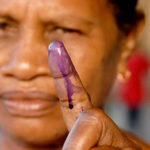
Political systems are the formal and informal political processes by which decisions are made concerning the use, production and distribution of resources in any given society. Formal political institutions can determine the process for electing leaders; the roles and responsibilities of the executive and legislature; the organisation of political representation (through ...» more
Capacity building for social protection
Research for this rapid literature review was unable to find specific material on impacts and lessons for supporting sustainable government capacity building of the social protection sector in general. There is, however, general guidance material on social protection, and lessons and impacts from specific programmes and projects. Consequently this report identifies ...» more
Links between gender-based violence and outbreaks of violent conflict
Gender-based violence (GBV) is prevalent in all contexts and countries of the world. There are studies that quantitatively find a strong correlation between levels of structural/institutional GBV (manifested as gender inequality) and conflict (e.g. Caprioli, 2005, etc). They find that gender inequality increases the likelihood that a state will have internal conflict. Countries ...» more


