Key findings: On international investment treaties: There is a large emerging empirical literature looking at the impact of international bilateral investment treaties (BITs) on foreign direct investment (FDI), but findings are mixed on the relationship between BITs and FDI. The evidence points to investment treaties being part of a wider set of forces fostering FDI. Concerns ...» more
Conflict and Stabilisation in Mali and the Sahel Region
The report covers factors including: Islamist terrorism; criminal networks and trafficking (of arms, drugs, cigarettes, and vehicles); and Tuareg rebellions against the Malian government. It also considers state weakness, including the weakness of state security structures in the north, and the role of neighbouring countries, ECOWAS, the AU and other international actors. ...» more
Evidence about the effectiveness of child protection programmes in developing countries
Key findings: There is little evidence on the effectiveness of child protection programmes in developing countries. Furthermore, some of the available evidence does not provide information on links between specific practices on the one hand and improved outcomes and impact for children on the other hand. There are, however, some targeted insights into what works and what does ...» more
Impact of microcredit interest rates on the poor
Key finding: Policymakers have been concerned about the effects of the seemingly high interest rates typically charged by microfinance institutions (MFI) lending money to poor people. Available data indicates that microfinance interest rates typically fall between 20 and 50 per cent per year (in places where inflation runs no higher than 10 per cent per year). It has been ...» more
Land transparency programmes and land data platforms
Key findings: Land administration in developing countries often fails to be pro-active, service-oriented, inclusive and pro-poor. These failures can lead to a range of issues including corruption, fraud, extortion and human rights violations. Several countries are currently reforming land policies and introducing new approaches to land administration. These efforts generally ...» more
International legal frameworks for humanitarian action
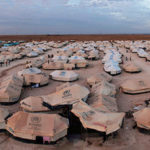
International legal frameworks for humanitarian action provide guidance on delivering assistance in a variety of challenging contexts. They can also be powerful tools in advocating for, and achieving, the protection of civilians. ...» more
Conflict drivers, international responses, and the outlook for peace in Mali: A literature review
This literature review aims to reflect relevant empirical and policy analysis together with more up-to-date commentary on the situation in Mali, as of January 2013. The conflict in Mali is highly complex and fluid: the situation with regards to the various groups engaged in conflict is developing on a daily basis, as are the responses from local and international ...» more
Theory-based evaluation approach
There is a wealth of literature available on theory-based evaluation and impact evaluation (TBE), but experts disagree on whether TBE is a common and clearly defined approach. Some think a common conceptual and operational understanding has been elusive, while others point to a completely consistent basic concept regardless of slight differences in the use of terminology. Some ...» more
‘Triggers’ to scale up assistance in advance of shocks
A growing literature advocates the use of triggers for action as part of an early warning and response system for humanitarian assistance, although there is as yet little discussion of approaches to defining such triggers. Triggers based on humanitarian need can include particular triggers for different levels of crisis. The literature also notes that both 'entry' and 'exit' ...» more
Humanitarian response to the post-election violence in Kenya in 2007/8
Findings cover different aspects of the humanitarian response, including the overall response (preparedness, coordination), integration of protection concerns, early recovery programmes, funding approaches and instruments and security for humanitarian organisations. The main conclusions and lessons learned on the overall humanitarian response are that:None of the actors ...» more
Interventions to tackle sex selection in Asia
The key finding of the literature is that the most effective strategies address social norms and beliefs, as well as providing technical solutions. Strategies need to take into account the specific drivers and expressions of sex selection in each context. The effective interventions identified are:Restricting the use of sex-selection methods: Restricting technology and ...» more
Sex selection – micro-level drivers and enabling/preventive factors
Key findings: Prenatal sex selection results in distorted sex ratios at birth (SRB). In many countries there are currently 110-120 male births per 100 female births (in contrast to the standard biological level of 104-106 male births). Postnatal sex selection also persists in several countries, measured by excess deaths among female infants and young girls. Sex selection is ...» more
Estimating the ‘legitimate’ percentage of annual military expenditures
Key findings: There are no frameworks that estimate a ‘legitimate’ annual percentage of military expenditure for countries. Legitimacy is often highly contested, and arms-importing and -exporting countries can differ, quite significantly, in their opinions on whether an arms transfer is legitimate and justified, or not. An internal needs assessment may outline different ...» more
Evaluation of programmes related to violence against women and girls
Key findings: Despite the growing number of interventions related to violence against women and girls (VAWG) during recent years, to date, few rigorous evaluations have been carried out of related programmes. The quality of existing evaluations is also variable. Experts have observed that efforts to address violence against women in recent years have been relatively small ...» more
Evidence for the Development Impact of Inclusive Service Delivery
This paper assesses the evidence of the human development and economic impacts of efforts to make services more inclusive. These interventions mostly involve extending access to under-served groups, but may also focus on improving utilisation or the quality of services delivered to marginalised groups. Attribution issues hamper examination of the contribution of efforts to ...» more
Participation in transparency and accountability initiatives
Key findings: Transparency and accountability initiatives have generally tended to centre on achieving ‘downstream’ accountability, referring to the efficient delivery of policies and priorities. The focus here has been on the role of citizens in the implementation of policies. There has been insufficient exploration of how the incorporation of citizen voice and participation ...» more
Effectiveness of demand-led technical assistance and cooperation on public sector reforms
Key findings: No cases demonstrate unambiguously that improved economic governance and inclusive growth has been the result of demand-led technical assistance. However, existing literature that evaluates technical assistance and public sector reforms in the Middle East and North Africa (MENA) region shows that public sector reform (PSR) can remove constraints on inclusive ...» more
Preventing conflict between refugees and host communities
This report includes programme examples from 13 countries. It highlights three main types of programme designed to tackle tensions and conflicts between refugees and host communities:Integrated humanitarian and development programmes – these seek to balance assistance to both refugee and host communities, or integrate services provided to them. Conflict resolution programmes – ...» more
Effective methods to improve police performance
Key findings: There are few detailed case studies of cities or regions in developing countries that outline effective methods for police reform. This is mainly due to the lack of evaluation that objectively identifies certain types of police reform as having improved performance. It is also true that changes in performance may not be universally judged as an improvement, reform ...» more
Legal and technical support programmes for negotiations on extractives or land deals
Key findings: Sub-Saharan Africa’s abundant natural resources could significantly boost the region’s economic growth and development, and large-scale projects carried out by potential investors, if strategically managed, are a potential source of income. Yet, many country governments lack robust regulatory frameworks, specialised knowledge and technical expertise, and ...» more


