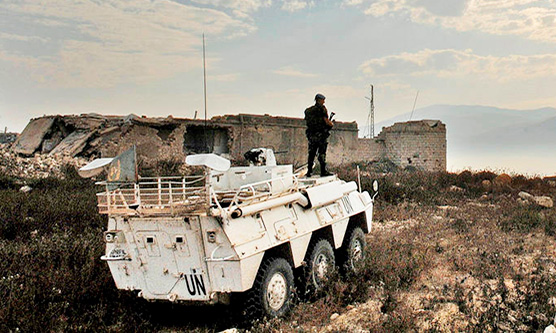
There is very little evidence on the impact of stabilisation service delivery initiatives on producing a peace dividend, or providing the basis for longer-term sustainable reform.Nevertheless, the most commonly cited potential benefits of service delivery in post-conflict environments are that visible delivery enhances state legitimacy, strengthens the social contract and ...» more
Conflict
State capacity and non-state service provision in fragile and conflict-affected states
How can governments effectively engage with non-state providers (NSPs) of basic services where capacity is weak? This paper examines whether and how fragile and conflict affected states can co-ordinate, finance, and set and apply standards for the provision of basic services by NSPs. It explores ways of incrementally engaging the state, beginning with activities that are least ...» more
Reintegration in Aceh/Post-conflict Environments
The situation in Aceh differs from other conflict environments in that most combatants have remained close to their communities during the conflict, with some never having left their villages. As such, minimal tensions are reported between former combatants and ‘receiving communities’. Reintegration measures have thus focused more on economic reintegration rather than social ...» more
Post-conflict Rehabilitation of Education Services
Education systems can contribute to conflict. In Rwanda, for example, the education system was used as an instrument in fomenting exclusion and hate. In many post-conflict settings, rehabilitation of the education sector requires not re-establishing the system that existed prior to the conflict but rather reforming the whole system. Education rehabilitation goes beyond ...» more
Election-related Conflict
Election-related conflict or violence can occur at any stage of the electoral process – from pre-election registration, candidate nomination and campaigning to election day balloting to post-election results. Although election-related conflict is an under-researched area, there is a small body of literature that addresses its potential causes and methods of prevention and ...» more
Mapping Research Programmes on Conflict and Social Cohesion
This query aimed to map long-term research programmes on the links between conflict, state fragility and social cohesion. However, there appear to be few programmes which link the three together. Most of the current work being undertaken centres either on the link between conflict and state fragility; or between conflict and social cohesion. This query focuses on the latter. ...» more
Equatorial Guinea and São Tomé and Principe
The two small island countries of Equatorial Guinea (EG) and São Tomé and Principe (STP) have experienced several governance problems over the years, recently compounded by the discovery of oil and the prospect of oil revenues. Fears of the ‘resource curse’ and the potential for conflict have resulted in a series of reforms projects.There is little documentation available on ...» more
Politics of Justice Sector Reform
There are a wealth of case studies available that discuss the impact of politics on justice reform, with less available on how justice reform impacts politics. Most of the resources identified demonstrate how the macro-political environment impacts on the justice sector or explore political dynamics within the sector that affect reform. Less material was found that discusses ...» more
Underdevelopment and Radicalisation in Bangladesh
While some experts cite poverty as a contributing factor to radicalisation, the vast majority of experts and the literature focus more on political underdevelopment and poor governance; rampant violence, criminality and corruption; non-state service provision by Islamist groups, particularly in education with the expansion of madrassas (religious schools); and the lack of ...» more
Under-development and Radicalisation in Pakistan
Most in-depth analysis has found little evidence of a direct link between poverty and terrorism in Pakistan, arguing instead that terrorism should be seen as a response to political conditions and long-standing feelings of indignity, and frustration at lack of opportunity. Other commentators, however, argue that while this may explain the motivations of the Islamist leadership ...» more
Stability and Development in Sudan – Three Areas
While there has been progress in the Three Areas (relative peace and stability; economic recovery in agriculture; the return of skilled and educated refugees and IDPs), the region remains volatile. Security is still an issue and the presence of land mines hinders recovery and development. Distrust of central government has persisted.The inadequate state of social services and ...» more
Pashtun Tribalism
Pashtuns take immense pride in their independence and have traditionally been fiercely resistant to central rule. Pashtun culture is governed by the ‘Pashtunwali’ which, literally translated as the ‘the way of the Pashtun’, is an unwritten code of honour which is integral to Pashtun identity.Pashtun society faces various challenges today, including the recent influx into ...» more
Drivers of Extremism
There is little consensus on what the key drivers of radicalisation and extremism are. Some scholars and policy-makers argue that an absence of participatory democracy and a legitimate arena to channel discontent contributes to extremism. However, others have found no causal connection between authoritarianism and extremism. A common finding in the literature is that while ...» more
Post-Conflict Recovery
There has been a push in recent years towards greater coordination and pooled financing mechanisms to promote sustainable post-conflict recovery. Donor coordination is facilitated through negotiated strategic frameworks, which articulate a shared vision, action plan and productive division of labour; and through common needs assessments. Pledging conferences have been ...» more
Economic Development and Peace in the Middle East
The development and conflict literature has noted links, generally, between economic development and stability/peace. However, there are few resources that focus specifically on this connection in the Middle East. This is, in part, because there are many other dimensions to stability/peace in the region beyond economics, such as continuing violent conflicts and occupation, ...» more
Climate change and conflict
There is very little academic research on the links between climate change and conflict. Of the few studies that are available, the findings are mixed. Most authors argue that whilst climate change may well result in increased conflict, this path is not certain. The most commonly discussed scenarios are that climate change causes resource scarcity, which prompts violent ...» more


