Key Findings: There is limited coverage of strategic communications programmes specifically aiming to prevent the recruitment of citizens who travel to conflict zones to become foreign fighters. There is relatively more coverage of strategic communications with respect to broader counter-radicalisation or countering violent extremism (CVE) approaches, but there are few case ...» more
Counter- and de-radicalisation with returning foreign fighters
Key Findings: The documentation on counter- and de-radicalisation programmes for returning foreign fighters in conflict-affected and nearby states is limited. There is evidence of programmes that aim to de-radicalise, disengage and rehabilitate detained extremists in prisons, which in some cases target foreign fighters. A number of these programmes in the Middle East and ...» more
Social protection programmes for people with disabilities
This mapping report gives an overview of nine social protection programmes for people with disabilities. The programmes are all run by governments of low income or lower middle income states in Sub-Saharan Africa and Asia. Many of the programmes have been established within the last decade, for example in Uganda, Kenya and Indonesia, and may still be in trial and error mode. ...» more
Incentives for gender responsive budgeting
It is difficult to conclusively evaluate the impact of gender responsive budgeting (GRB) on gender outcomes and in turn the impact of incentives on GRB and on women’s empowerment more widely. This is both due to a limited evidence base about impact and to the complexity in assessing and interpreting impact (Combaz, 2013). Literature on GRB is primarily prescriptive and there ...» more
Non-political drivers of violence
A growing body of literature looks at non-political drivers of violence. These, often inter-related factors, include: Climate change and environmental degradation: There is limited evidence to suggest that there is a causal link between climate change and environmental degradation and violence. However, climate change can exacerbate existing fragile situations leading to ...» more
Community-driven development and indigenous, ethnic minority, and disability issues
Few CDD programmes explicitly address minority issues. Many programmes target vulnerable groups such as women, youth, disabled, ethnic minorities, but as one group rather than distinguishing their differing needs. Few programmes are targeted specifically at vulnerable groups alone. Many programmes focus on reducing poverty and vulnerability, with the implicit assumption that ...» more
Voice, empowerment and accountability
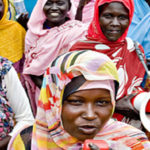
Voice, empowerment and accountability (VEA) interventions aim to support poor and marginalised people to build the resources, assets, and capabilities they need to exercise greater choice and control over their own development, and to hold decision-makers to account. This guide provides an overview of the best available evidence on the impact of VEA interventions. It identifies ...» more
Lessons from confidence building measures
When designing CBMs, lessons include: Link CBMs to wider peace- and state-building processes or negotiations; locally design CBMs according to local context; use CBMs in situations where trust is low; start CBMs in non-controversial, or symbolic, issue areas; design CBMs with long-term, incremental approaches; combine several CBMs at different track levels, and in different ...» more
Conflict sensitivity
Reflection among aid actors after the devastating genocide in Rwanda led to the realisation that humanitarian and development actors contributed to increasing tensions and exacerbating the conflict. Aid interventions have since been understood to become a part of the context – and in conflict settings, to become part of the conflict. This acknowledgement that aid is not neutral ...» more
Social protection programmes supporting women survivors of domestic violence
Few cash transfer programmes appear to specifically target women survivors of domestic violence. As a result this paper takes a broad understanding of social protection. The most effective programmes appear to combine both prevention and response measures. Many of the programmes described below are ‘transformative social protection’, as they aim to change lives through ...» more
Dealing with election-related violence in fragile and conflict-affected states
There are a number of causes of election-related violence, which can occur at different stages of the electoral cycle. Dealing with this violence very much depends on understanding these causes and tailoring measures to address them. This report draws on guidance material, evaluation literature and empirical studies to provide a brief overview of measures to prevent and address ...» more
The role of security organisations in security sector reform
There is consensus that donor approaches to SSR have failed to achieve the ambitious goals and objectives espoused in policy documents. Debates in recent literature centre on the reasons for this ‘policy-practice gap’ (Sedra, 2010; Bakrania, 2014b). Key themes include: There is agreement in the literature that donor assistance has generally taken an apolitical and technical ...» more
Capacity development at the national level in fragile and conflict-affected states
There is a clear international consensus on desirable principles for capacity development in fragile states, which include country ownership, use of country systems, improvements to technical assistance and training, adapting initiatives to local contexts, a focus on adaptive and flexible approaches, a focus on results, improved coordination, and a focus on a clear set of ...» more
Integrated programmes supporting adolescent girls
This rapid review provides examples of integrated programmes that support adolescent girls. The programmes have positive impacts on girls’ empowerment, livelihoods, health and education. Evaluations found that girls especially appreciated having a nearby safe space of their own and being educated by their peers. Girls who participate in integrated programmes may experience the ...» more
Oil and gas revenue sharing
In the oil and gas sector, there are several revenue sharing models in operation around the world. These range from those that favour the derivation principle i.e. each subnational government’s share is related to the oil revenue originating in its territory, to those that are more like intergovernmental transfers (Ahmad and Mottu, 2002, pp. 15-16). Examples of ...» more
Conflict
Conflict is inherent in all societies and arises when two or more groups believe their interests are incompatible. ‘Conflict’ is not, however, interchangeable with ‘violence’. Non-violent resolution is possible when individuals and groups have trust in their governing structures, society and institutions to manage incompatible interests. Conflict becomes a problem when this ...» more
Methods for monitoring and mapping online hate speech
Approaches to mapping hate speech online can be classified into three principal groups based on their purpose: Real-time monitoring and mapping: These projects, the best known of which is the Umati project in Kenya, aim to provide continuous monitoring of online media. Such projects are rare, but they have the potential to serve as early warning systems or enable a reaction ...» more
Statebuilding and peacebuilding

Statebuilding and peacebuilding, while conceptually distinct, are becoming more closely integrated in academic and policy circles. This Topic Guide looks at the links (and tensions) between statebuilding and peacebuilding, how these activities interact, and how they can be approached in practice. A related Guide looks at State-Society Relations and Citizenship in Situations of ...» more
Supporting local governance in protracted conflicts
Successful interventions to support the delivery of services by local governments and administrations have been undertaken in a number of countries, including Afghanistan, Nepal, Somalia and Sudan. The majority of these interventions fall into the community-based approaches category. These are often used in areas where there is no effective local government or where supporting ...» more
Gender
Gender is a way of looking at how social norms and power structures affect different groups of men and women. Understanding that men and women, boys and girls experience poverty differently, and face different barriers in accessing services, economic resources and political opportunities, helps to target interventions. ...» more


