While the literature on DDR programmes, their evolution and DDR experiences in individual countries (notably in Africa), is considerable and broadly consistent, there is little on the long-term effectiveness of DDR interventions. DDR programming has evolved significantly over the past few decades in response to changing situations and emerging challenges; from traditional ...» more
Conflict
Religious leaders and the prevention of electoral violence
There is limited literature specifically on the role of religious leaders in countering electoral and political violence, even less on ways in which to engage leaders in taking on such a role. While highlighting particular initiatives involving religious leaders during electoral cycles, this report also draws on literature that discusses the engagement of religious actors more ...» more
Humanitarian response in middle-income countries
The literature uncovered by this rapid review indicates that there is very little evidence available about the way in which humanitarian response is carried out in middle income countries in comparison to low income contexts (or an amalgamation of the two). Where there have been evaluations of humanitarian response in middle income countries, they have not really focused on ...» more
Women and girls in forced and protracted displacement
There is general consensus in this grey and academic literature on the vulnerabilities faced by women and girls in forced and protracted displacement, although less is known about the opportunities they may have and the long-term impacts. Much of the recent evidence available focuses on displaced populations in Europe and countries neighbouring Syria. There is more of a focus ...» more
Webinar: religion, conflict and violent extremism
On May 11 2016, Dr. Sara Silvestri (City University London), Andrew Glazzard and Martine Zeuthen (RUSI) discussed issues raised in their reading packs on religion and conflict and violent extremism. An audio-only version is available below.
State-society relations and citizenship
State-society relations, citizenship and socio-political cohesion are areas of great importance to statebuilding and peacebuilding and are crucial to an integrated approach. State-society relations are defined by DFID as ‘interactions between state institutions and societal groups to negotiate how public authority is exercised and how it can be influenced by people. They are ...» more
Lessons learned from security-related programming in stabilisation and conflict-affected contexts
The challenging environment that ongoing conflict presents means that evidence based analysis of security sector initiatives is hard to find (Ball and Walker, 2015, p. 3) and the evidence base uncovered by this rapid literature review is small. Interviews with experts suggest that there may be more documented cases and lessons which are not publicly available. Security ...» more
The Central African Republic crisis
Since March 2013, the Central African Republic (CAR) has been experiencing violent sectarian conflict. The conflict initially began between two well-defined rival groups that became increasingly fragmented, with competing agendas and interests. Further, the current transitional government lacks the capacity and political will to enforce any real political reforms. A number ...» more
Political economy of conflicts in Kyrgyzstan since the 2000s
A fundamental finding, widely shared among authors, is that it is not only the national level that matters, but also regional and local ones, in violent and non-violent conflicts. In recent and older history, local conflicts sometime develop into national ones. Other key findings of the literature review include: The root causes of both conflicts are largely similar and ...» more
Violent extremism
‘Violent extremism’ is rarely defined: neither the United Nations nor the European Union has an official definition. USAID defines it as “advocating, engaging in, preparing, or otherwise supporting ideologically motivated or justified violence to further social, economic or political objectives”. However, this apparently simple and obvious statement conceals a great deal of controversy and uncertainty….» more
Supporting reconciliation in post-conflict situations
The key literature on reconciliation approaches is not very recent. However, there is a reasonable body of more recent evidence, particularly from Africa, of on-ground experience of implementing diverse reconciliation mechanisms. Given that reconciliation must be an indigenous process, one which donors can support but not lead/impose (see below), the literature says little ...» more
Building social cohesion in post-conflict situations
The approaches covered in this report include community-driven development, job creation, social protection and education. Whilst in theory there are strong links between these and social cohesion, there is very little rigorous empirical evidence to verify these links. More specifically, the literature highlights that: Community-driven development (CDD) programmes promote ...» more
Religion and conflict
The role of religion in international relations and its relationship with conflict and with peacebuilding is increasingly acknowledged but remains disputed. Secular resistance to incorporating religion in public affairs has given way to numerous academic publications, discussion forums and public initiatives. Governments and international organisations are increasingly willing to examine religion and incorporate it, to…» more
Private sector engagement in fragile and conflict-affected settings
The private sector and private sector development (PSD) are considered to have a crucial role to play in contributing to economic recovery and addressing a number of drivers of fragility. Key findings of the review include: Fragile and conflict-affected settings pose challenges for engaging with the private sector. Significant internal and external imbalances are ...» more
The effects of Russian intervention in the Syria crisis
The linked Russian political-military initiative in Syria – with a bombing campaign from 30 September, support of Iranian-Hezbollah-Syrian military ground offensives, and convening of international conferences to try and secure the Assad regime – has changed the dynamics of the 56-month Syrian conflict. The effects of the intervention are significant, and are both ...» more
Conflict analysis of Muslim Mindanao
The Autonomous Region of Muslim Mindanao (ARMM) in the Philippines was founded in 1989. It consists of five provinces – Maguindanao, Lanao del Sur, Basilan, Sulu and Tawi-Tawi. Conflict between Moro groups seeking an independent state in Mindanao, and the Government of the Philippines (GPH) has been ongoing for four decades. After numerous attempts to resolve the conflicts, a ...» more
Links between education and peace
Education is a significant contributor to peace, and appears in two of the 24 indicators in the Positive Peace Index produced by the Institute for Economics and Peace. Education can lead to peace and be a part of ‘building back better’ by supporting the transformation of the security situation, political institutions, economic regeneration and social development. However, ...» more
Curriculum development in fragile states to encourage peace and reduction of conflict
Research on education and conflict shows that education systems are not politically neutral but are an important part of the political economy that can exacerbate or mitigate conflict (Novelli et al., 2014; Bush and Saltareilli, 2000). The curriculum can be used as a vehicle to promote dominant ideologies. There are numerous instances where school curricula have been used to ...» more
Responding to mass atrocities and human rights abuses
Mass atrocities are generally understood as genocide, war crimes and crimes against humanity, but many other human rights abuses are committed in conflict-affected contexts. There are a range of responses to these abuses, particularly by national and international actors, constituting international criminal justice and transitional justice. Development actors are increasingly directly involved in managing conflict or…» more
Peacekeeping
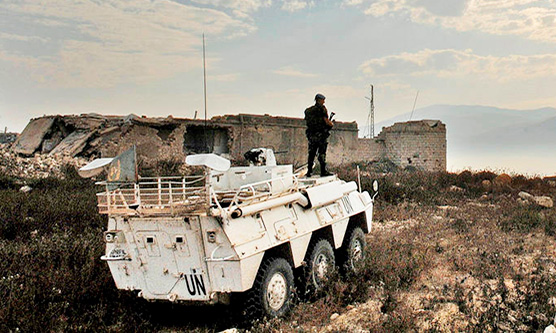
The aim of peacekeeping is to preserve peace, normally after a peace agreement has been achieved. It has evolved from a primarily military activity, observing cease-fires and separation of forces after inter-state conflict, to multidimensional missions taking on a range of civilian tasks. Peacekeeping is conducted by both the United Nations and by regional organisations,…» more


