

A growing body of literature looks at non-political drivers of violence. These, often inter-related factors, include: Climate change and environmental degradation: There is limited evidence to suggest that there is a causal link between climate change and environmental degradation and violence. However, climate change can exacerbate existing fragile situations leading to ...» more
Development Pressures
Capacity development at the national level in fragile and conflict-affected states
There is a clear international consensus on desirable principles for capacity development in fragile states, which include country ownership, use of country systems, improvements to technical assistance and training, adapting initiatives to local contexts, a focus on adaptive and flexible approaches, a focus on results, improved coordination, and a focus on a clear set of ...» more
Oil and gas revenue sharing
In the oil and gas sector, there are several revenue sharing models in operation around the world. These range from those that favour the derivation principle i.e. each subnational government’s share is related to the oil revenue originating in its territory, to those that are more like intergovernmental transfers (Ahmad and Mottu, 2002, pp. 15-16). Examples of ...» more
Statebuilding and peacebuilding
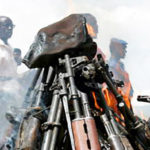
Statebuilding and peacebuilding, while conceptually distinct, are becoming more closely integrated in academic and policy circles. This Topic Guide looks at the links (and tensions) between statebuilding and peacebuilding, how these activities interact, and how they can be approached in practice. A related Guide looks at State-Society Relations and Citizenship in Situations of ...» more
Supporting local governance in protracted conflicts
Successful interventions to support the delivery of services by local governments and administrations have been undertaken in a number of countries, including Afghanistan, Nepal, Somalia and Sudan. The majority of these interventions fall into the community-based approaches category. These are often used in areas where there is no effective local government or where supporting ...» more
Urbanisation and conflict in Pakistan
There is a broad body of literature on violence in Pakistan, however less specific material drawing links between urbanisation and incidences of violence. Some of the main links between urbanisation and violence identified in the available literature include: Competition for resources, particularly land, water and housing. Weak infrastructure. Demographic change, ethnic ...» more
Harmful traditional practices in diaspora communities
In general, the trajectory of change among the diaspora communities discussed in the literature surveyed for this report is away from carrying out HTPs. There are fewer examples identified of communities wishing to uphold these practices in their new countries. The literature identifies several factors which impact on change in attitudes and practices: Legality: All host ...» more
Urban humanitarian crises
The degree to which a city is vulnerable to humanitarian crises depends on location-specific physical, social, economic and environmental factors. The literature suggests that geographically, cities in Asia are the most vulnerable to natural disasters. Asian cities also experience the most diverse range of natural disasters. The main causes of urban vulnerability are often ...» more
Evidence of impact of emergency cash transfers on gender and protection
Key messages: The major trends and gaps in the evidence in this report are: On the whole, ‘gender’ is used to refer to women. More recent papers include more analysis of how CTs impact men, especially on if they find it disempowering for women to be favoured as beneficiaries. Gender analysis is not deeply ingrained into emergency CT programme evaluation. Many papers include a ...» more
Benefits of urbanisation in Asia
This report reviews selected literature on urbanisation in East, South and South-East Asia, and draws out its developmental benefits and lessons for donors. There is a strong evidence base on urbanisation and urban poverty, but mostly looking at the development challenges of increasing urbanisation. Since the literature largely takes a negative or problem-solving approach to ...» more
Cost of elections in fragile states
There is limited literature available on this topic. A lot of the information that is available only provides the cost of certain elements of the election, mainly in relation to voter registration. In addition, there appear to be inconsistencies in the costings provided by the available sources. The most comprehensive source currently available is “CORE: A Global Survey on ...» more
Measuring disaster resilience
Several agencies have developed guidance for measuring disaster resilience. One of the most comprehensive and widely-cited frameworks is Twigg’s (2009) ‘characteristics of resilience’ framework. Based on five dimensions of resilience identified in the Hyogo Framework for Action (governance, risk assessment, knowledge and education, risk management and vulnerability reduction, ...» more
Peacebuilding and economic growth
This report provides an overview of the literature on the relationship between peacebuilding and economic recovery and growth in fragile and conflict affected states, with particular emphasis on the Asia-Pacific context. The majority of the conflicts occurring in the Asia-Pacific region take place at the sub-national level. There is evidence to suggest that while many of the ...» more
Community-based disaster risk management in Pakistan
Disaster risk management (DRM), including disaster risk reduction (DRR), has received increased attention - particularly community-based DRM (CBDRM). Despite limited implementation and very limited evidence, some findings emerge: Factors of success have included: - Work that is multi-sectoral, integrated and multi-hazard. - Good programming, with high-quality analysis, ...» more
Effectiveness of sector-wide approaches in fragile contexts
There is no consistently strong evidence that sector-wide approaches (SWAps) have been effective at achieving development outcomes in fragile contexts. Available evidence is mixed, partly because of the uniqueness of each country’s context (Negin 2010, p. 5). SWAps are generally considered to be most appropriate in relatively stable low- and middle-income countries, with ...» more
State fragility and social cohesion
This report reviews the relationship between social cohesion and state fragility – focusing on literature from 2010 onwards. There is no clear empirical understanding in the literature of how social cohesion contributes to state resilience or fragility, as it is very difficult to measure, and to assess independently other variables that impact on state fragility. Key points ...» more
Key actors mapping: Somalia
This report provides an overview of power-holders in Somalia. It finds that power is heavily concentrated in individuals rather than formal institutions. Though Somalia now features a nascent central government as well as regional polities and one secessionist government, government institutions are not the sole or even primary locus of power. Most power continues to reside in ...» more
Impact of extensive disasters
Extensive risk is defined by UNISDR as ‘The widespread risk associated with the exposure of dispersed populations to repeated or persistent hazard conditions of low or moderate intensity, often of a highly localized nature, which can lead to debilitating cumulative disaster impacts’. Examples of types of extensive disasters are given in the literature as floods, landslides, ...» more
Responding to the Syrian refugee crisis in Lebanon – lessons learned
Three groups of lessons emerge from the literature: Political lessons include: understanding Lebanon’s historic refugee experience; understanding how sectarian divisions affect policy and decision-making; the limitations of excluding key stakeholders; and understanding historic relations between refugees and host communities. Strategic lessons include developing a medium-term ...» more
International aid to Lebanon
Key findings: Solid data from the OECD and OCHA makes mapping the official aid to Lebanon possible. However, official data is only part of the story: major aid flows have remained unrecorded, for example from Saudi Arabia and Iran. Information on macro-level aid also seems largely gender-blind. Lebanon has received large volumes of international donor aid since the 1970s. ...» more


