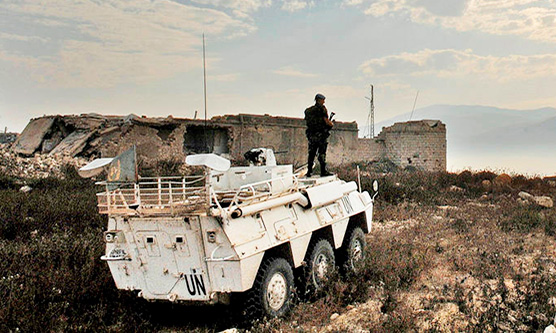
Conflict prevention refers to approaches to avoid, minimise, and/or contain potential violent conflicts, and to prevent violent conflict from re-emerging. Engagement with local actors such as civil society, politicians, and community groups can have an important positive impact on conflict prevention, both in situations that have not yet experienced violent conflict and in ...» more
Conflict analysis
Resource Management and Conflict
There is an extensive literature dedicated to examining the links between the abundance of mineral resources and the incidence and duration of violent conflict. While the ‘resource curse’ thesis has become well-known, claims that an abundance of natural resources increases the likelihood of conflict have been widely disputed.However, beyond the case study literature, there is ...» more
Women’s Education, Conflict and Stability
There are very few studies which provide empirical support to the view that cultures where women are politically, socially and economically repressed are more prone to violent conflict and instability. Furthermore, evidence for a direct relationship between the level of educational attainment amongst women and girls and the degree of fragility or stability is scarce and no ...» more
Gender and Conflict Assessments
Guidance for carrying out gender and conflict assessments is not well-developed; conflict assessments and gender assessments exist as separate types of analytical documents but there are comparatively few examples of gender and conflict assessments, and no established methodologies for doing them. Guidance for undertaking such assessments is drawn from three broad sources: a) ...» more
Transitional Justice and Reconciliation – Zimbabwe
On the 15th of September 2008, ZANU-PF and the two MDC formations signed the Global Political Agreement (GPA), intended to break the deadlock following the March 2008 elections. The agreement is silent on transitional justice, although it does include the provision to “give consideration to the setting up of a mechanism to properly advise on what measures might be necessary ...» more
Impact of Radicalisation/Violent Extremism on Poverty and Development Outcomes
Identifying the impact of violence arising from radicalisation processes and extremism upon poverty and development outcomes is difficult due to the lack of literature which deals with the subject matter specifically. The discussion concerning radicalisation and extremist violence tends to focus on the following areas: 1) Islamic extremism and religious fundamentalism; 2) ...» more
Reintegration Best Practice
The following ‘lessons learned’ in relation to reintegration are repeated across the literature:Reintegration is a long process and programmes must be part of a wider security sector reform strategyReintegration should be nationally led and take a participatory approach, including various stakeholders.Planning for reintegration should begin early.Clear selection criteria should ...» more
Peacebuilding Commission
The Peacebuilding Commission (PBC) is an intergovernmental advisory body, which formally came into existence in June 2006. The PBC, the Peacebuilding Support Office (PBSO) and the Peacebuilding Fund (PBF) comprise the UN’s new peacebuilding architecture. ‘The PBC (and by extension, the PBF and PBSO) were designed to:bring sustained attention to the pressing needs of countries ...» more
The World Bank in Fragile States
Some of the recurring findings from the literature on the World Bank’s performance in fragile and conflict-affected states include the following:Despite efforts to become more conflict-sensitive, the Bank’s approach to conflict-affected and post-conflict states focuses more on ‘doing things differently’ than ‘doing different things’. This is partly due to a continued reluctance ...» more
Community-based Approaches and the Extractives Sector in Situations of Fragility and Conflict
The literature offers a number of recommendations on community engagement in the extractives sector. The following are particularly relevant to fragile and conflict-affected contexts:Engage with local communities as partners in preventing and managing conflict, rather than approaching them as a threat or risk.Distribute any benefits from the project (including jobs, development ...» more
The impact of the financial crisis on conflict and state fragility in sub-saharan Africa
Sub-Saharan Africa was largely insulated from the initial stages of the financial crisis as the majority of the countries in the region are de-linked from the international financial markets. However, with the worsening of the global financial and economic crisis, the region as a whole has now been exposed to the downturn, and growth estimates have been continually lowered from ...» more
Country Strategies on Conflict Prevention
Although theories and strategies on conflict prevention are well-developed, institutionalised practice remains limited, especially at the national level. The literature contains some descriptions of individual projects set up mainly by international NGOs which their sponsors have claimed to be successful, at least at local levels. However, these are not necessarily sponsored by ...» more
Conflict and Sexual and Domestic Violence against Women
The literature on sexual violence in armed conflict indicates that rape and violence against women and girls prior to, during and after conflict seem to be extensive in scope and magnitude throughout the world – with reported incidents in conflicts in Africa, the Americas, Asia, Europe and the Middle East. The forms of sexual violence most commonly documented are:sexual ...» more
Aid Interventions on Gender and Conflict
Many experts point out that the impact of aid interventions on gender, especially in post-conflict settings, is rarely measured. Most of the literature on aid programmes that is available often takes a more critical perspective, with a view to suggesting what could have been done better. As a result, there is relatively more information on the strategies which are considered ...» more
The Impact of Conflict on Women’s Education, Employment and Health Care
The extent to which conflict restricts women’s freedom of movement depends on a number of factors including the stage of conflict, whether the women are displaced, whether they are directly or indirectly affected by the conflict, and the cultural norms of the conflict-affected area. Forced displacement, for example, may in some cases lead to greater mobility, where women assume ...» more
The Impact of the Global Financial Crisis on Conflict and Social Stability
While there seems to be little academic research which addresses the impact of economic crises on conflict, fragility and social stability, it has been widely discussed in the media recently. According to a recent US Senate intelligence briefing, almost a quarter of all countries have already experienced low-level instability, such as changes in government and anti-state ...» more
Identity Politics in Nepal
In 1990, the 30 year-old Panchayat regime was overthrown, a new Constitution written and a multiparty system re-established. Although these reforms did not properly address the exclusion of marginalised groups and ethnic centralisation continued, they did provide the space for such grievances to be mobilised and heard – resulting in the emergence of ‘identity politics’.There ...» more
Service Delivery and Stabilisation
There is very little evidence on the impact of stabilisation service delivery initiatives on producing a peace dividend, or providing the basis for longer-term sustainable reform.Nevertheless, the most commonly cited potential benefits of service delivery in post-conflict environments are that visible delivery enhances state legitimacy, strengthens the social contract and ...» more
Reintegration in Aceh/Post-conflict Environments
The situation in Aceh differs from other conflict environments in that most combatants have remained close to their communities during the conflict, with some never having left their villages. As such, minimal tensions are reported between former combatants and ‘receiving communities’. Reintegration measures have thus focused more on economic reintegration rather than social ...» more
Post-conflict Rehabilitation of Education Services
Education systems can contribute to conflict. In Rwanda, for example, the education system was used as an instrument in fomenting exclusion and hate. In many post-conflict settings, rehabilitation of the education sector requires not re-establishing the system that existed prior to the conflict but rather reforming the whole system. Education rehabilitation goes beyond ...» more


