

This mapping report gives an overview of nine social protection programmes for people with disabilities. The programmes are all run by governments of low income or lower middle income states in Sub-Saharan Africa and Asia. Many of the programmes have been established within the last decade, for example in Uganda, Kenya and Indonesia, and may still be in trial and error mode. ...» more
Social Development
Incentives for gender responsive budgeting
It is difficult to conclusively evaluate the impact of gender responsive budgeting (GRB) on gender outcomes and in turn the impact of incentives on GRB and on women’s empowerment more widely. This is both due to a limited evidence base about impact and to the complexity in assessing and interpreting impact (Combaz, 2013). Literature on GRB is primarily prescriptive and there ...» more
Community-driven development and indigenous, ethnic minority, and disability issues
Few CDD programmes explicitly address minority issues. Many programmes target vulnerable groups such as women, youth, disabled, ethnic minorities, but as one group rather than distinguishing their differing needs. Few programmes are targeted specifically at vulnerable groups alone. Many programmes focus on reducing poverty and vulnerability, with the implicit assumption that ...» more
Voice, empowerment and accountability
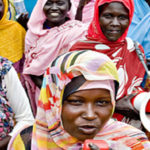
Voice, empowerment and accountability (VEA) interventions aim to support poor and marginalised people to build the resources, assets, and capabilities they need to exercise greater choice and control over their own development, and to hold decision-makers to account. This guide provides an overview of the best available evidence on the impact of VEA interventions. It identifies ...» more
Social protection programmes supporting women survivors of domestic violence
Few cash transfer programmes appear to specifically target women survivors of domestic violence. As a result this paper takes a broad understanding of social protection. The most effective programmes appear to combine both prevention and response measures. Many of the programmes described below are ‘transformative social protection’, as they aim to change lives through ...» more
Integrated programmes supporting adolescent girls
This rapid review provides examples of integrated programmes that support adolescent girls. The programmes have positive impacts on girls’ empowerment, livelihoods, health and education. Evaluations found that girls especially appreciated having a nearby safe space of their own and being educated by their peers. Girls who participate in integrated programmes may experience the ...» more
Gender
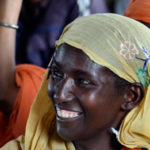
Gender is a way of looking at how social norms and power structures affect different groups of men and women. Understanding that men and women, boys and girls experience poverty differently, and face different barriers in accessing services, economic resources and political opportunities, helps to target interventions. ...» more
The impact of conflict on poverty
There is consensus in the literature that conflict impacts on poverty, but evidence on how this impact occurs is often limited, unsystematic, and sometimes contradictory. Much of the literature also discusses how poverty can contribute to conflict and the possibility of cycles of poverty and conflict as a result. Overall the latest evidence suggests that violent conflict ...» more
Elected women’s effectiveness at representing women’s interests
This rapid literature review collates evidence on women’s actions and interactions in parliaments in Africa. The literature mostly focuses on Rwanda, South Africa, Uganda and Tanzania (Bauer, 2012). There are several consistent findings from African countries, which enables drawing together key lessons: Effectiveness at representing women’s interests: The presence of ...» more
Non-food items (NFIs) and the needs of women and girls in emergencies
The NFIs which best meet the basic needs of women and girls in emergencies include: Hygiene/dignity kits: women and adolescent girls require locally appropriate sanitary items to manage their menstrual hygiene. These may be reusable cloth or disposable sanitary pads. The opportunities for privately washing, drying, and disposing of sanitary cloths or reusable pads need to be ...» more
Harmful traditional practices in diaspora communities
In general, the trajectory of change among the diaspora communities discussed in the literature surveyed for this report is away from carrying out HTPs. There are fewer examples identified of communities wishing to uphold these practices in their new countries. The literature identifies several factors which impact on change in attitudes and practices: Legality: All host ...» more
Gender in fragile and conflict-affected situations
This rapid literature review, in annotated bibliography format, collates a large amount of literature published in 2013 and 2014 (up to April 2014) on the topic of gender in fragile and conflict-affected situations. It is not a systematic or exhaustive review, but does provide a comprehensive overview of the literature available. It includes all types of available written ...» more
Lesbian, gay, bisexual, transgender and intersex rights in national human rights institutions
NHRIs almost unanimously take a universal human rights stance which is validated and backed up by the UN. This institutional support allows NHRIs to criticise governments for failing to support certain human rights. NHRIs often emphasise that LGBTI rights are contained within existing UN rights principles, particularly the rights to privacy, health, life, freedom from ...» more
Evaluations of scaling up
Factors that affect the success of scaling up include: Politics: A number of evaluations suggest that political support is a key success factor, and offer recommendations on how to build this support. Demonstrating how the programme will help achieve key government goals, as well as building personal connections with government officials. Decentralisation can make scale up ...» more
Practical guidance to integrate gender into public financial management
A medium-sized body of rigorous literature provides guidance on how to integrate gender into PFM systems successfully. Guidance on effective approaches: - Overall requirements are: securing the known enabling factors (such as sustained political support, sufficient capacities and conducive institutional arrangements); adapting to context; involving a range of stakeholders ...» more
Evidence of impact of emergency cash transfers on gender and protection
Key messages: The major trends and gaps in the evidence in this report are: On the whole, ‘gender’ is used to refer to women. More recent papers include more analysis of how CTs impact men, especially on if they find it disempowering for women to be favoured as beneficiaries. Gender analysis is not deeply ingrained into emergency CT programme evaluation. Many papers include a ...» more
Defining social protection systems
There is no common definition and a lack of clarity among the available literature of what the selected organisations consider these to be. Some organisations advocate a child-sensitive approach to social protection (for example UNICEF and Save the Children), while others take a right-based perspective (such as SIDA and IDS). Some of the research think tanks contacted indicated ...» more
Increasing financial investment in women and girls through gender responsive budgeting
Overall, evidence indicates that it is difficult to attribute financial change to GRB initiatives. There are a limited range of impacts attributed to GRB, however less specific details provided on why initiatives have been successful. Drawing from the literature that is available, some of the identified successes, and factors contributing to their success, include: South ...» more
Benefits of urbanisation in Asia
This report reviews selected literature on urbanisation in East, South and South-East Asia, and draws out its developmental benefits and lessons for donors. There is a strong evidence base on urbanisation and urban poverty, but mostly looking at the development challenges of increasing urbanisation. Since the literature largely takes a negative or problem-solving approach to ...» more
Gender in community-driven development
Elite capture is a significant concern. The evidence is clear that 'uncontrolled' CDD will not necessarily benefit women, the poor and other disadvantaged groups. Women's participation is a central problem as they do not usually have the time and/or confidence to contribute to village planning processes. To reach women and other disadvantaged groups, CDD needs to have explicit ...» more


